Have you ever looked in the mirror and wondered why your hair actually loses its color? While we often accept graying as an inevitable sign of aging, dermatological science suggests it is frequently just a communication breakdown at the root. Your hair follicles function like tiny factories that produce melanin, but over time, the workers inside simply stop receiving the order to keep manufacturing pigment.
Enter the era of biomimetic peptides. Specifically, a molecule known as Acetyl Hexapeptide-1 acts like a biological text message for your cells. Instead of painting over the strand like a traditional dye, this ingredient mimics the body’s natural “wake up” signal, effectively telling the dormant cells in your hair root to restart the production process they abandoned years ago.
By repairing this connection, we change the approach from masking gray to supporting actual function. Current studies indicate that using these signaling molecules helps in restoring natural hair color without chemical dyes, proving that the machinery for pigment is often still there—it just needs the right key to start the engine.
Inside the Hair Follicle: Why the 'Ink Factory' Shuts Down
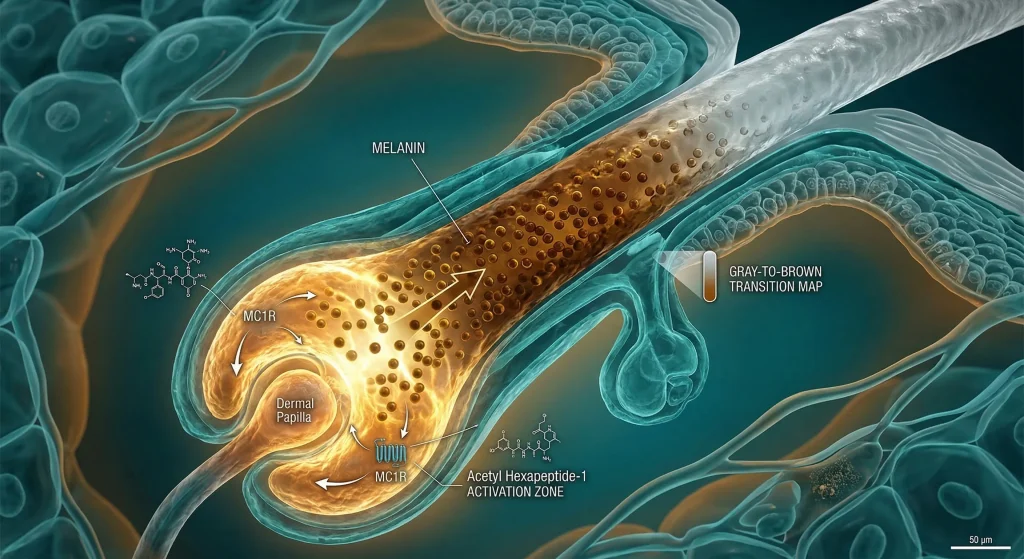
Your hair color isn't painted on; it is actively manufactured deep within the root. Specialized cells called melanocytes act like dedicated factory workers, constantly churning out pigment to infuse into the growing hair strand. When you start seeing gray, it usually means these workers have stopped showing up to their shift, leaving the hair structure colorless and hollow.
The specific shade you were born with depends entirely on the "ink" mix these cells create. Melanin production typically results in two distinct types: eumelanin vs pheomelanin. The former creates rich black and brown tones, while the latter is responsible for vibrant reds and blondes. For decades, this mixture flows smoothly, but over time, the chemical environment inside the follicle changes, making it difficult for the pigment to survive.
One of the primary causes of this shutdown is a process surprisingly similar to salon bleaching. As we age, our bodies naturally produce hydrogen peroxide at the root. Without enough natural antioxidants to neutralize this buildup, the impact of oxidative stress on hair follicle pigment becomes destructive, literally bleaching the color from the inside out before it ever leaves your scalp.
In many cases, the melanocytes are still alive, just dormant or overwhelmed by internal stress. They haven't necessarily vanished; they are simply waiting for the noise to clear and for a fresh command to resume their work. This potential for reactivation is exactly where modern science steps in to mimic the body's original color signal.
The Biomimetic Breakthrough: How Acetyl Hexapeptide-1 Mimics Nature’s Color Signal
To get those dormant pigment factories running again, scientists didn't need to invent a new chemical language; they simply decided to copy the one your body already speaks. This approach is called biomimicry. Instead of introducing foreign substances that might irritate the scalp, biomimetic peptides for hair repigmentation are designed to look and act exactly like the biological signals your cells are already waiting to hear. It is less like forcing a door open and more like finding the original blueprints to cut a fresh key.
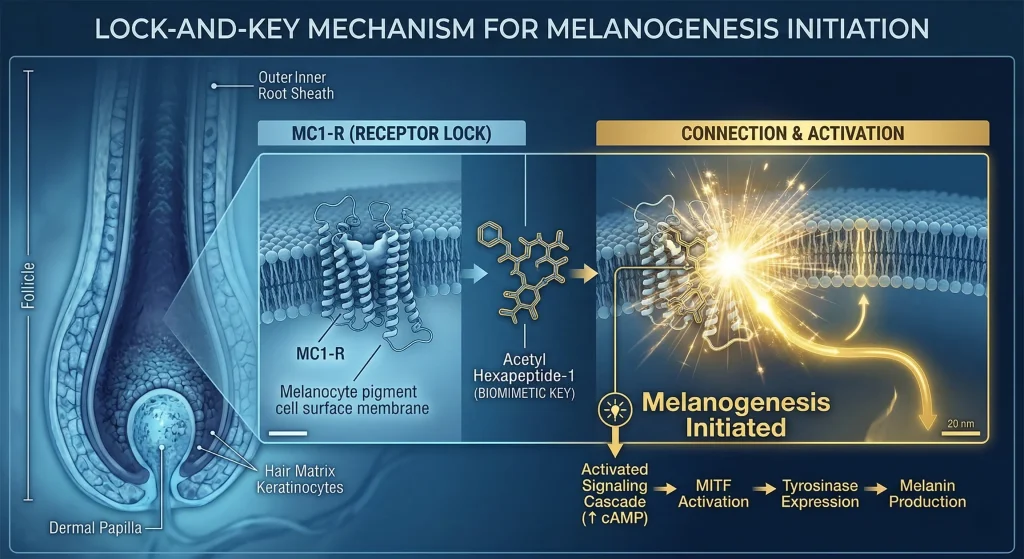
Acetyl Hexapeptide-1 acts as that precise duplicate key. It is engineered to mimic a natural hormone called Alpha-MSH, which is the body's standard "on" switch for color production. Under normal conditions, Alpha-MSH fits perfectly into the pigment cell to trigger action, but age often disrupts this supply chain. By applying this peptide, you are effectively providing a replacement key that fits the lock perfectly, reminding the cell of its primary job: stimulating melanogenesis to produce fresh pigment.
Precision is critical here because the goal is to target hair follicles specifically without confusing other systems in the body. This specific peptide is identified as CAS 448944-47-6, a designation that verifies the molecule's exact structure. This unique identifier ensures the ingredient is pure and targeted solely at the pigment centers, acting like a private line of communication rather than a loudspeaker shouting at every cell in the neighborhood.
Once this "spare key" is inserted, the process moves from simple recognition to active cellular response. The peptide binds to a specialized receiver on the cell surface known as the MC1-R receptor. This connection is the vital spark that re-establishes the command chain, but understanding how this receptor actually "hears" the volume of the signal is the next step in maximizing results.
Turning Up the Volume: How MC1-R Receptors Reactivate Melanin Production
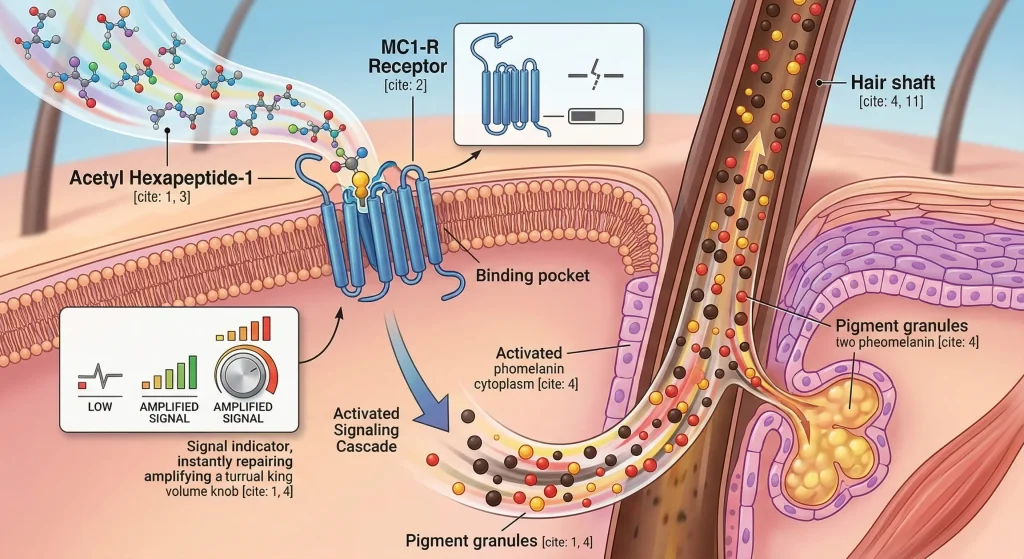
Imagine trying to listen to a radio station with a broken antenna; the broadcast exists, but the sound simply doesn't come through. In your hair follicle, the MC1-R receptor acts exactly like that antenna. It sits on the surface of the pigment cell, waiting to catch specific chemical broadcasts. When Acetyl Hexapeptide-1 arrives, it effectively repairs the connection, ensuring the critical message to create color is received loud and clear rather than being lost in the static of aging.
Once the peptide connects with this cellular antenna, it triggers MC1-R receptor activation for melanin production. This interaction flips the switch on the cell’s internal machinery, transitioning it from a dormant state to an active one. The cell immediately begins to mobilize resources, restarting the assembly line that constructs pigment molecules. It acts essentially as a volume dial, turning a weak, sporadic whisper of activity into a steady, productive hum that the hair follicle can actually use.
The visible outcome of this biological wake-up call is a measurable shift in increasing hair pigment density. Unlike a dye that creates a flat, uniform coating on the outside of the shaft, this process packs the hair strand with color granules from the inside out. As the cells work harder, they saturate the growing hair fiber with more natural pigment, resulting in a richer, multidimensional color depth that artificial products cannot replicate because it is genuine biological color.
Effective cellular signaling creates the difference between a fading, graying strand and vibrant, youthful hair. By restoring communication lines at the microscopic level, the follicle regains its independent ability to maintain color. This represents a fundamental change in strategy: instead of relying on external paint to hide the gray, we are empowering the body to fix the issue itself, which naturally leads to a comparison against traditional chemical hair dyes.
Peptides vs. Dyes: Why Stimulating Pigment Beats Covering It Up
Thinking of traditional color treatments as a coat of paint helps explain why they often look flat or opaque. Chemical dyes work by blasting open the hair cuticle to deposit artificial pigment, essentially masking the strand under a foreign substance. In contrast, the difference between hair darkening peptides and hair dye is the direction of the color source. Peptides work from the inside out, encouraging the follicle's internal factory to restock natural melanin rather than just spray-painting the warehouse walls.
Beyond just color mechanics, this biological approach drastically changes the impact on your skin. Standard box dyes often rely on ammonia or peroxide, which can strip moisture and cause irritation. Acetyl Hexapeptide-1 safety profiles are generally much gentler because they mimic natural body proteins, preserving scalp health while restoring color.
- Chemical Dyes: Surface coating, instant results, harsh "skunk stripe" regrowth, potential skin irritants.
- Peptides: Internal restoration, gradual darkening over weeks, seamless root blending, supports follicle health.
While the biological route is healthier, it requires a shift in mindset. A dye job offers instant gratification, but peptide stimulation is a cumulative process that rebuilds color density over time. This gradual shift eliminates harsh root lines, offering a seamless transition that looks entirely authentic.
Choosing Your Treatment: Navigating Melitane, Greyverse, and Bulk Peptides
When you start shopping for these biological color boosters, you might encounter confusing marketing terms instead of clear chemical names. Commercial formulas often bundle the active peptide under trademarked names like Melitane or Greyverse, which act as branded delivery systems for the same star player: Acetyl Hexapeptide-1. The key is to ignore the flashy front-of-bottle branding and flip the package over to the ingredient list to ensure the actual peptide is listed as a primary component rather than buried as an afterthought.
Efficacy relies heavily on concentration, meaning a drop of the peptide in a gallon of water won't restore your natural hue. Clinical efficacy data suggests that specific percentages are required to successfully flip the pigment switch back on, yet many drugstore serums dilute the active ingredient to keep costs low. Comparing Melitane vs Greyverse for hair color restoration often comes down to which product includes the peptide at a functional level—usually around 2% to 5%—rather than just dusting it in to satisfy a marketing claim.
For those who want total control over potency, sourcing Acetyl Hexapeptide-1 bulk solution is becoming a popular alternative to pre-mixed serums. This approach allows you to add the "messenger" molecule directly to your favorite leave-in treatments, ensuring you get the full strength required for results. Once you have selected a potent source, the next challenge is ensuring those expensive molecules actually reach the follicle.
Maximizing Your Results: How to Apply Peptide Serums for Scalp Absorption
Even the most potent formula is useless if it sits on top of your hair strands instead of reaching the root. Think of it like gardening: to grow a healthy plant, you must water the soil, not the leaves. Topical peptide treatments work specifically by signaling the cells deep within the follicle, so your goal is to minimize hair contact and focus entirely on the skin to facilitate proper scalp absorption.
Getting the formula to the follicle requires a deliberate technique rather than a casual spray. Master how to apply peptide hair serums for best results with this daily routine:
- Section: Part your hair to expose the skin in areas where graying is most visible.
- Apply: Drop the serum directly onto the scalp rather than the hair shaft.
- Massage: Use fingertips to gently work the liquid in for 30 seconds to boost local circulation.
- Wait: Leave the treatment on for at least four hours before washing to allow full penetration.
Many users fail to see changes simply because they treat these bio-active serums like styling products. Washing your hair immediately after application rinses the investment away before the peptide can deliver its message to the pigment factory. Once you have perfected the application, the only remaining ingredient is patience.
The Roadmap to Color: Managing Expectations and the Timeline of Change
You no longer have to view graying as an inevitable end, but rather as a quiet signal waiting to be boosted. Understanding the benefits of acetyl hexapeptide-1 for premature graying shifts your goal from covering up flaws to reawakening dormant cells. This biomimetic approach respects your body's natural rhythm, offering a smarter, gentler alternative to the harsh cycle of chemical dyes.
Patience is your most valuable asset in this restoration journey. Because you are restarting cellular machinery rather than applying a superficial stain, commit to a consistent daily routine for at least 90 days. While many people seek to reverse gray hair naturally with acetyl hexapeptide-1, true success relies on giving those root-level factories enough time to ramp up production.
Embracing this science empowers you to work with your biology instead of fighting against it. By consistently delivering this messenger molecule, you aren't just hiding the gray; you are effectively restarting the conversation between your hair and its natural color potential.